How to House Train & Crate Train Your Adult Dog
93It is a dog’s nature to want to please you.
If you are consistent in being firmly disappointed when your dog has an accident and extremely happy when he relieves himself appropriately, he will quickly learn to do as you wish.
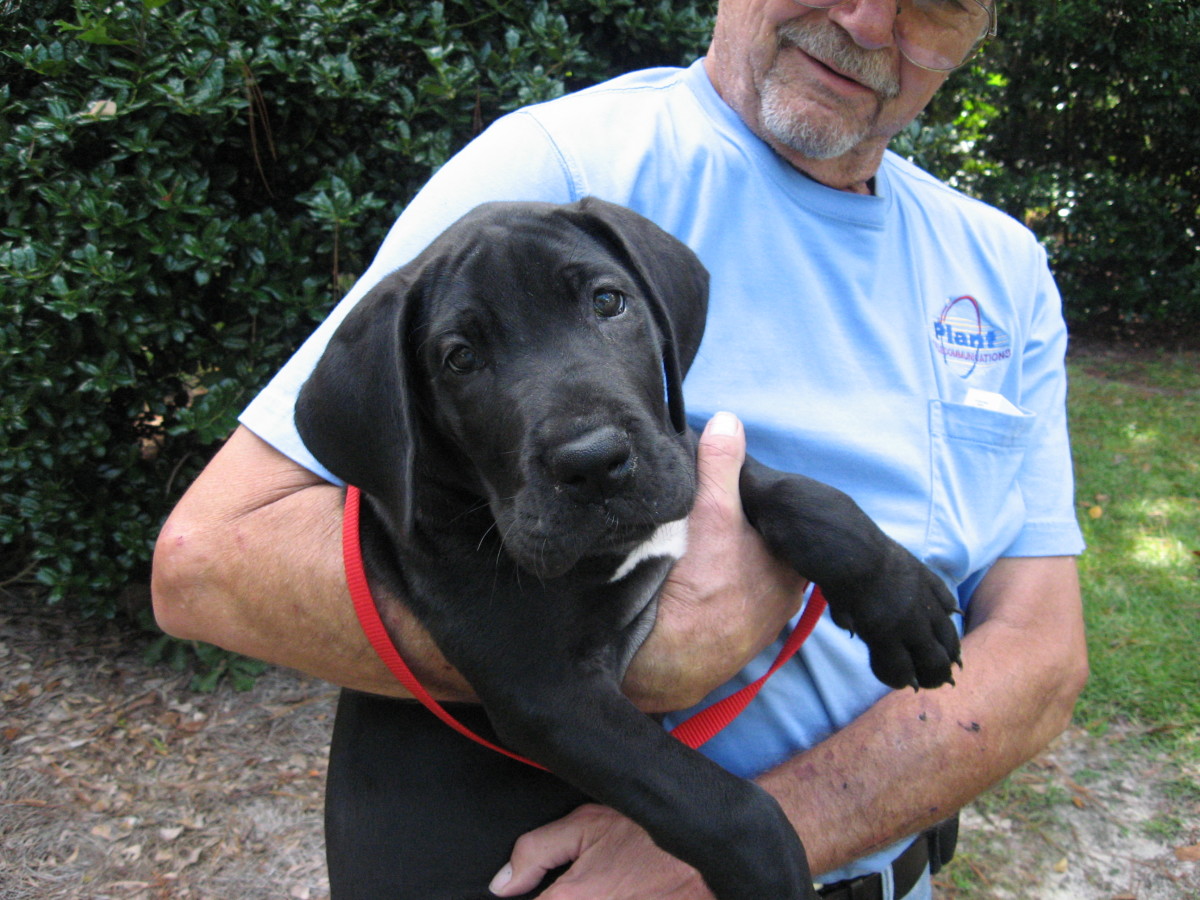
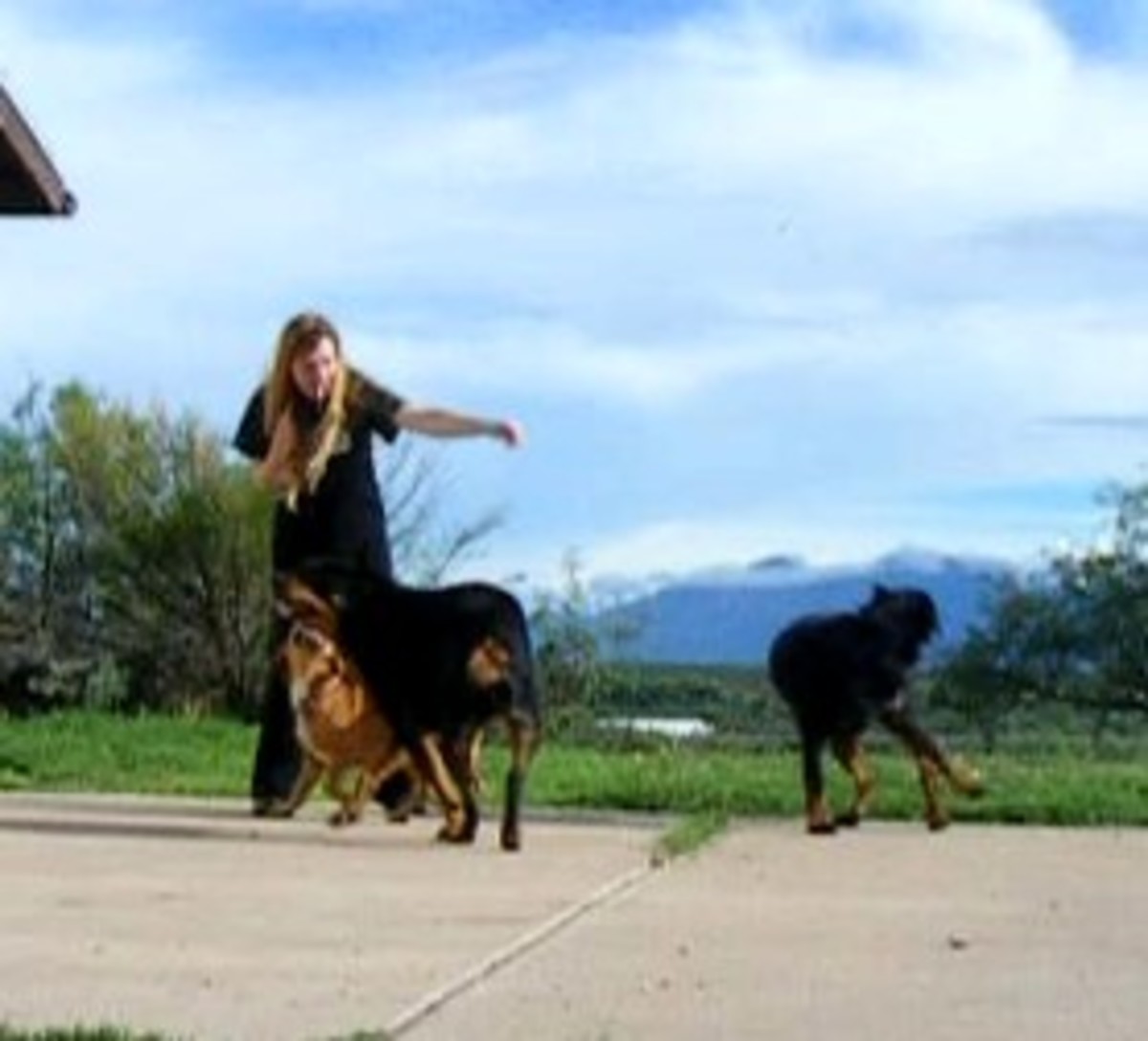
Crate Training Helped Amber With House Training.
Most dogs will house train within a week or two.
Having an adult dog that has accidents in the house can be very distressing and very wearing, but this is often the case when you adopt an adult dog. The situation could arise from lack of training or improper training from the dog's previous owner, or it could just be that the dog is confused or frightened in his new surroundings.
When determining how to go about managing this situation, there are a few things you should look at. First of all, does the dog have accidents in the same place every time, or is it random? If he is using the same spots every time, it means that he thinks that is where he is supposed to go. If it is random, it may indicate a medical problem or a dietary problem.
If you are feeding a food that is too rich, it can cause your dog to have accidents. Cheaper foods that have lots of artificial colors and filler can cause problems. Buy a good brand of dog food that is right for the age and activity level of your dog. For example, if your dog is mostly a house dog and only goes on a walk once a day, don't give him a high energy, high protein, performance food. Give your dog a food designed for mature dogs with a low to moderate level of activity.
If your dog is an unnueutered male, know that this can contribute to the problem in regards to urination. An intact male dog may want to mark his territory. Neutering may or may not help with this problem, but it is always a good idea, anyway. A neutered male dog makes a better household pet, and having your pets spayed./neutered is the responsible thing to do to avoid the currently overwhelming problem of unwanted and abandoned pets.
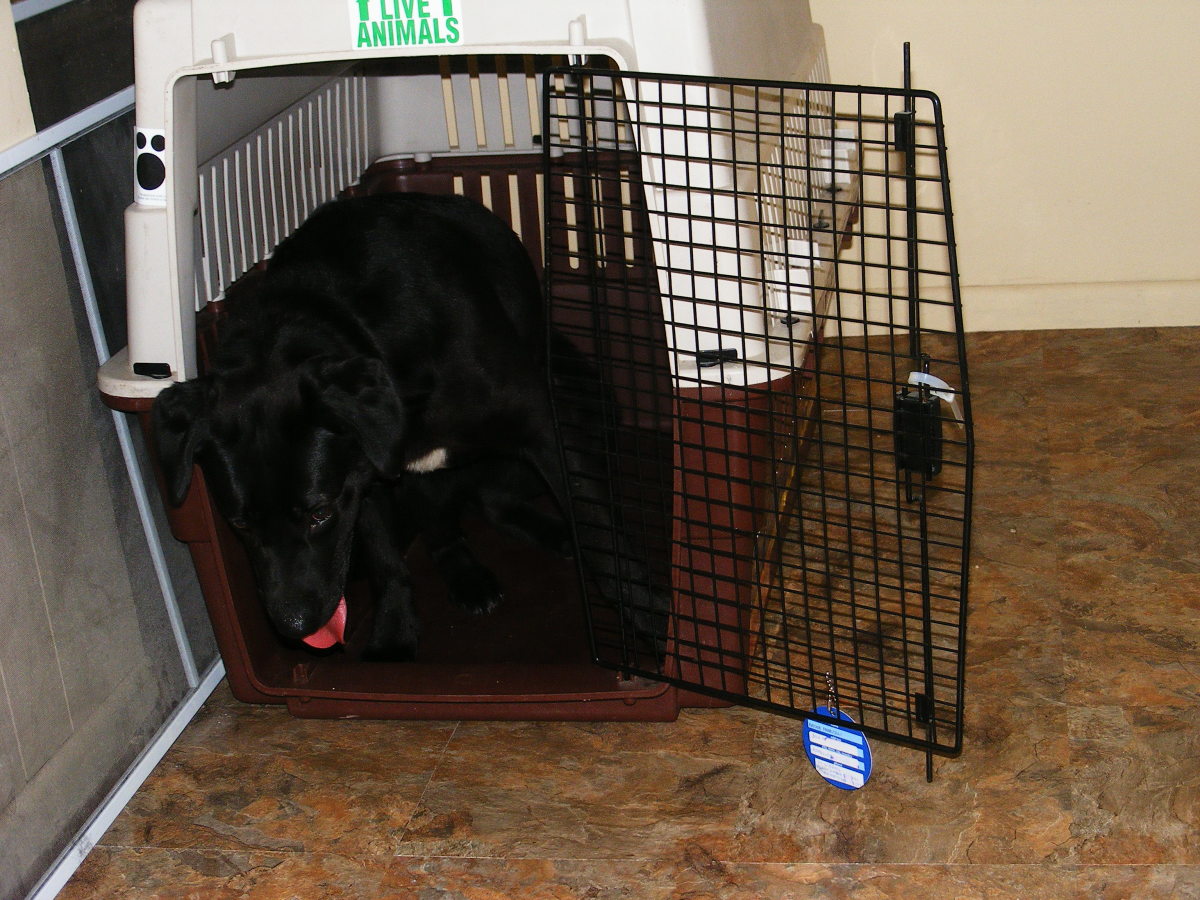
Once you have ruled out or dealt with medical and dietary problems, you can begin training. Crate training is a good idea if you have to leave your dog in the house when you are out. With crate training, you put the dog in a traveling crate just big enough for your dog to stand up and turn around in whenever you are gone and cannot watch your dog or let him out. Although this may seem mean, it really isn't. dogs sleep most of the time, anyway and don't move much from one spot. Using a crate helps to house train the dog because he will not want to relieve himself where he sleeps.
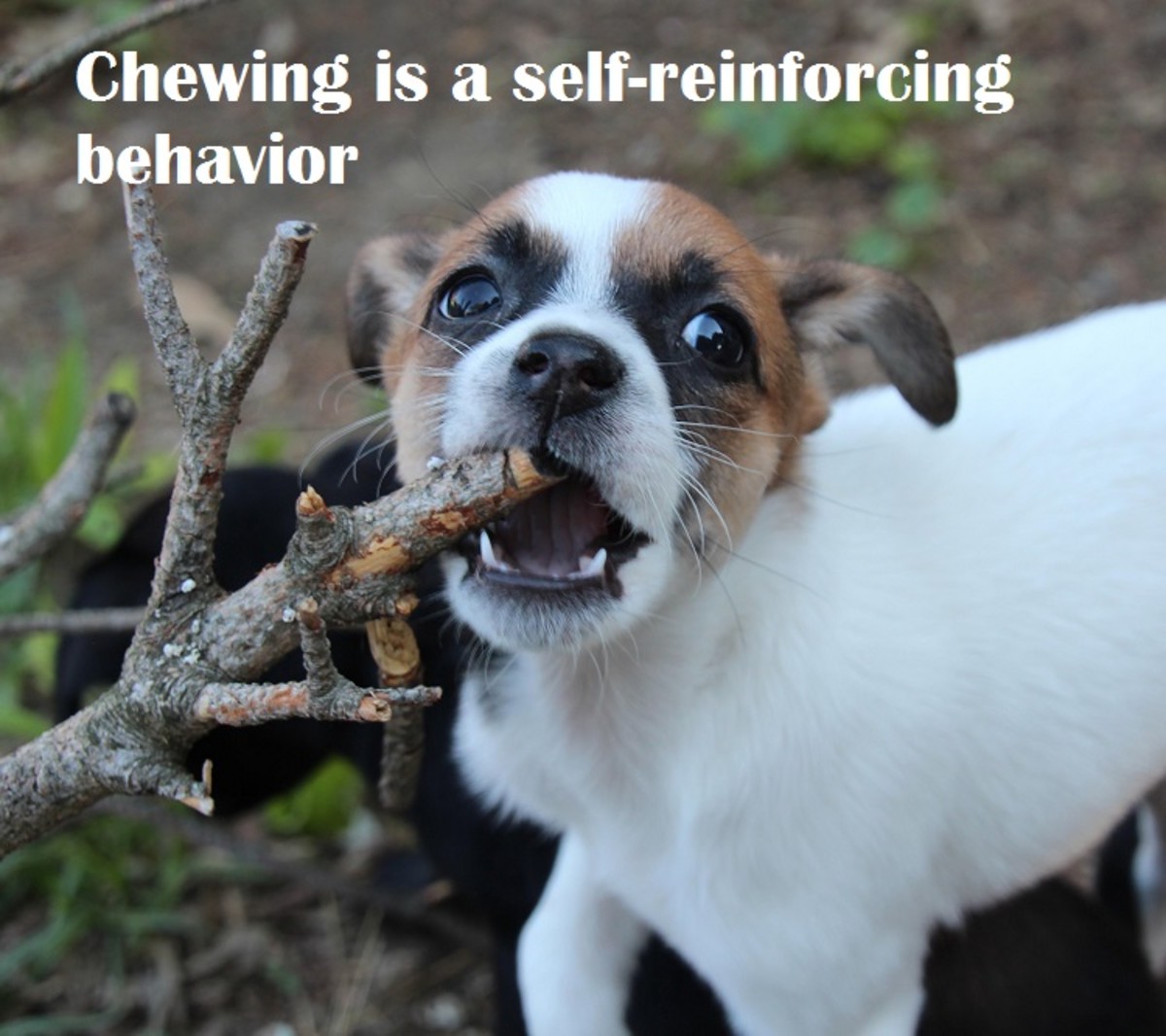
Having your dog crate trained is also handy when you have friends over who are afraid of dogs, or if you just need to put your dog out of the way for awhile so that you can work on your house or do some other thing where he would be in the way. Crate training is also useful in cases of destructive chewing. It is a good way to protect your belongings and keep peace in your home. My dog is crate trained, and she stays in the crate whenever I go out. It is a safe place for her, and she prefers to be in the crate during thunderstorms because she is very frightened of them.
So, to crate train you would begin with fairly short periods of time, say an hour or two. You can gradually build up to a full work day. If you need to be gone longer than that, you will want to make arrangements for someone to check on your dog and take him out to relieve himself and play a little bit.
When you begin training, take your dog out to his specified area and be sure he relieves himself before you leave. Put your dog in the crate with a good sturdy chew toy, and leave. Don't leave any food or water. This will just make a mess and may cause your dog to need to relieve himself. When you come back, let your dog out first thing and take him straight outside to his designated area. When he relieves himself, praise him mightily. He will soon learn that there is one place to relieve himself, and it is not in your house! If your dog has an accident in the crate, don't scold him. Just take him to his designated spot and go through the drill. He will be embarrassed enough, and dogs hate to make a mess where they sleep, so having an accident in the crate is something your dog will be motivated to avoid.
To avoid accidents, you will also want to be sure that you take your dog out often, to the same place and use the same words every time to encourage him to do his business. Praise your dog when he relieves himself appropriately outside. Tell your dog something like, "Good dogs poop outside!" or whatever you are comfortable with, but just be sure it is the same words said the same way every time.
If you do find that your dog has had an accident in the house, and especially if you catch him at it, take him firmly by the collar, show him the offending item, and firmly tell him "NO!" Then take your dog outside to the place where he is supposed to relieve himself and use those key words to inform him that "Good dogs poop outside!". If you can leave him safely outside to think about it, this is a good reinforcer. Dogs hate to be separated from their best friend (you!) so a 15 minute time-out is a helpful way to seal the lesson. But only do this if your dog can be secured inside a fence or by a tether. Don't ever let your dog run loose.
In my experience, most dogs will house train within a week or two. Of course it takes longer for puppies, but the basic training principles are the same. If training takes longer than a couple of weeks for an adult dog, be sure to consult your veterinarian. Have your dog checked for any health problems that may be causing the accidents.
You have two things on your side with house training. First, it is a dog's nature to want to please you. If you are consistent in being firmly disappointed when your dog has an accident and extremely happy when he relieves himself appropriately, he will quickly learn to do as you wish. Second, dogs don't want to make messes where they live and sleep. If your dog feels firmly established in your home and has his own crate to sleep in, he will know that the house is not the right place to relieve himself. You just need to show him, firmly and consistently, where the right place is, and soon that is where he will go.
Copyright: SuzanneBennett: November 6, 2008
This Airline Kennel Style is Best!
![]() | Amazon Price: $24.95 List Price: $49.99 |
![]() | Amazon Price: $46.49 List Price: $89.99 |
![]() | Amazon Price: $12.95 |
![]() | Amazon Price: $77.95 |
CommentsLoading...
Hi.My dog is 7 years old. I am in school now. I have not been at home as much lately. My dog has been messing in the house. I know this is my fault because I have not been home as much. However it is becoming a complete habit. She does not like to go to the bathroom outside now. If I put her in a crate, she hurts her self and uses the bathroom in there and rolls in it and make a complete mess out of the cage and herself. I don't know what to do. My house is beginning to stink. I willing to take the time to get her back on track...I just don't know how to do this successfully with out the crate. Any suggestions would be greatly appreciated. Please help!
Suzanne, Amber is a very sweet looking dog.
What do you advise for a male adult dog who is perfectly housebroken and has no accidents, but likes to mark his territory on vertical objects-- only if nobody is looking?
Thanks, Suzanne. That's what I thought. I've been following pretty much the policy you suggest.
I have a Bichon Frise that does exactly what Suzanne has described and I have never been able to break him of it.
I have a 10 month old Boxer who is epileptic. We dont punish her for messing in her crate as we never know if she had a fit when we were out but its now everytime I leave, even if its for an hour or a full day, I do take her out right before, she is on a good quality dog food and she knows the spot she is supposed to go potty at. I have tried making the crate smaller so she has enough room just to turn around and sleep but I get home and she is covered in poop or pee. its like she doesnt care what she sleeps in. If she is out all day when I am home she doesnt mess at all and goes every 5 hours or so to the door to go potty. Is there anything more I can do, like I said she is epileptic so I know there will be messes from time to time but what can I do about the everyday occurances?
I have a shi tzu and a pug they are fully grown but they are still going pee and poop in the house.We give them treats when they come in from outside and when they urinate in the house we say no in a toned voice. We are getting fed up with cleaning up their mess and i need help how to get them to stop. Please help!
I have a 9 month old yellow lab who is not very smart and we didnt train her because the owner was gunna get her but kept laying off and ended up not getting her,she is not very smart and doesn't even fetch, but the biggest problem is that she pees in her kennel and barks a lot at night and early in the morning and we let her out but she wont go pee and then we put her back in her kennel and she pees and it is getting really tiring and annoying. We do not let her roam around the house for various reasons, so she and my 4 year old male black lab are either outside on the porch or in the back kennel room. Can You help?
I've had it! Our long hair daschound will be a year old on the 19th. Our daughter (13) has always put him in his kennel at night (on her bed) from day one but now that he is getting older she wants him to sleep with her. Last night she had a friend sleep over. They put Charlie inbetween them, were going to sleep and he peed, RIGHT ON THE BED. She said she had taken him out before bed too. What can I do? I'm tired of his retaliatory behaviors.
Very awesome hub. This is very useful information. Thanks for sharing.
Hello Suzanne (or should I say HHHHHEEEEEEELLLLLPPPPPPPPPP!!!!!)
We have 3 small dogs, 2 Jack Russel Terriers (a mother 7 yrs and her son 5 yrs) and the youngest, a 4 yrs old male Chi-Chon (1/2 Bichon Frise and 1/2 Chihuahua). I'll send the family portrait later...
Both males are not fixed. The female is fixed.
Anyways, here is the challenge, the youngest has always been the trouble maker and ever since we got him, we've had random "attacks" of peeing in the house - primarily in the kitchen and living room area.
I've caught him, in the act, several times! We keep the door open to the patio (we live in a Condo) and we do walk the dogs several times a day.
Recently the peeing incidents have gone up, and over the years we have tried just about every technique of stopping the dog from peeing in the house. I'm especially frustrated since the door to the patio is always open. He will even pee just inches from the door, inside the house!
Now, before you say, well, just donate the dog to a local rescue, here is the real problem....
My wife does not have her own children, and has a very strong "maternal" bond with this dog, he is "her" dog - more so than any other dog in the house.
So, wringing its neck (as my Dad would say), or dropping it off at the local shelter - is clearly out of the question! Arghhh....
Anyways, If you have any suggestions for a Frustrated Husband, who both values his marriage, and all three dogs, I need to find a suitable solution so I don't have to put my foot down and have all three dogs removed! This would break my heart!
I sure hope you can find a solution that can help. :-)
Hello again Suzanne,
Thanks for the advice. I will see what I can do. :-)
We do currently walk them at a minimum of 3 times per day, and usually 4 or even 5 times per day.
My wife is pretty against the neutering of the male dogs. I wanted to do this when they were pups.
I could not help notice that you mentioned in earlier posts that once a male is an adult, neutering is not very helpful, yet now you say it will help.
Sorry, I'm a bit confused - I need to be sure if I'm going to go toe-to-toe with my wife on that issue.
Thanks however for all the other advice.
;-)
Hi Suzanne,
Thanks for your help... I'll keep you updated as to my progress with my wife.... Maybe giving her a week's vacation overseas (while I fix the boys) will be a possible compromise??? LOL
Frustrated Husband....
Hi Suzanne,
I just started having a problem with my 3-year-old lab mix/border collie mix and it sounds like you may be able to help. She has been crate trained from the time we got her (10 wks old) and has always loved it. She has only been crated at night for the last year or so. We take her out at night, come in, give her a treat and say "Time for beddy" and she always runs right in. This has always worked at my family home and my apartment (we spend a lot of time at both). However, the last couple of weeks while we're home for the holidays, there have been a few times that she absolutely refuses to go in her bed at night. She hides behind the Christmas tree, which is in the corner she likes to go in during the rest of the year (usually behind a chair) but sometimes will wait an hour and then run upstairs, try to jump on the bed, or end up sleeping on the couch. Bottom line, it has been a battle to get her in the bed, involving putting her leash on her and walking her into it, and one time picking her up and putting her in. She still gets treats, praise, etc. but I'm sure it's not a 100% positive thing. The worst time of it just happened, when she pulled out of her collar when I was trying to walk her toward it, and after I put it on her, growled when I tried to get her to move. I don't like hearing her growl! I know she was trying to let me know that she was NOT pleased with the situation, but I didn't want to let her behavior win either. If she could sleep calmly downstairs by herself it'd be one thing, but I can't have her running around in the middle of the night either. My apartment is one big open space (two floors) so there is no way to close the door either if she isn't sleeping in her crate.
Is this a sign that she just shouldn't be crated at night anymore? What do you suggest that I do? The one thing I've thought of is to practice with her going in there on command during the day for even a second (command, response, reward) but if she still won't go in or continues to refuse by lying down, pulling out of her collar, running away or the growling, I don't know what to do.
Any help or advice would be greatly appreciated!!
She's never had an accident in her crate, but she definitely has been allowed to sleep outside of it a handful of times sporadically in the last year. For example, like one of the above comments, she is scared of thunderstorms so if she is already hiding at bedtime, I let her stay in the spot she's in to feel "safe." With this new attitude about her crate, my parents have let her roam free a couple times overnight while we've been home over the holidays rather than battling with her about it. What's funny is that her "crate" at my parent's house is actually a big dog bed in the same spot her crate was when both she and I lived here, just blocked off with a doggie gate instead of the actual crate. So it's definitely big enough, and it's not a new arrangement - that's been her set-up while we're here for any visits in the last year.
I will have to see if she still does this once we get to my apartment and then I will definitely try to move her crate to see if she'd sleep with it in my room. I'm going to try to practice going in there with her today but otherwise, do you think letting her sleep outside of it for the next couple nights that we're at my parents' house would be a bad idea?
Thank you so much for your help!!


TheBigGuy 2 years ago
Thanks for the advice on my question. My dog has not had any accidents in the house in a few days. She knows where she has to go outside but sometimes it just takes her a while to go. According to your article and other articles I've read it says that dogs won't go where they sleep. My dog does when we leave. The reason we've gotten for this is because she's so nervous she can't help herself. Do you really think socialization could be the solution? Is it a confidence thing?